AI 'surveillance pricing' under scrutiny from U.S. lawmakers
National News

Audio By Carbonatix
5:35 PM on Tuesday, August 4
Thérèse Boudreaux
(The Center Square) – In a rare instance of bipartisanship, Congress is taking a closer look at AI surveillance pricing, where corporations will charge some consumers higher prices based on their shopping habits and personal data.
Major corporations – including Amazon, Walmart, JetBlue, Lyft, Kroger, and Target – will buy or directly harvest consumer data and track consumer behaviors in-store or online. Using artificial intelligence tools, they create profiles on people, then charge customers different prices for the same item or service based on an individuals’ “willingness to pay.”
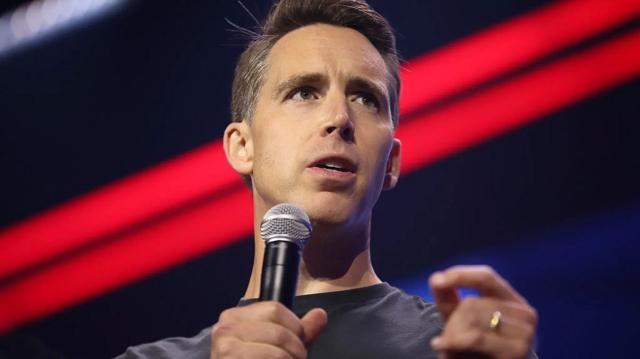
“You know, hardly a day goes by in this town without some booster of AI talking about how it’s going to transform the American economy for the better. The question is, whose betterment will this transformation lead to?” Sen. Josh Hawley, R-Mo., said during a Senate Judiciary subcommittee hearing held Tuesday.
“The partnership between the AI industry and some of the biggest corporations in America to effectively scam consumers out of every last dollar they have in order to buy products that they need and rely on,” Hawley added. “In other words, they’re going to figure out how to rip you off, one person at a time.”
Critics of the practice say it both raises privacy concerns and exploits customers. Consumer “profiles” can include purchase history, real-time location, demographics, annual income, relationship status, IP address, internet browsing history and even cursor movements.
Dozens of industries have taken advantage of those profiles, implementing surveillance pricing for groceries, rental housing, airline fares, hotel rooms, retail goods, electronics, transportation, delivery services, event tickets and more.
“Groceries are a necessity, not a luxury,” Lindsay Owens, CEO of thinktank Groundwork Collaborative, said in her testimony before the subcommittee. “Companies shouldn’t be able to use your online history, your past purchases, or your location information to charge you a higher price for food your family needs to live.”
Hillary Caron, testifying for the United Food and Commercial Workers International Union, highlighted how surveillance pricing no longer takes place only online; now, with electronic shelf labels, or ESLs, customers face fluctuating prices in brick and mortar locations as well.
ESLs are connected to stores’ inventory systems, point of sale systems, pricing systems, and sometimes even store cameras that track customers via facial recognition as they move through the store.
Unlike paper labels, ESLs can be changed remotely and instantaneously. Coupled with AI-powered data collection, a company can track when a customer checks the price of an item online, then raise the price as soon as the shopper enters a physical store.
Stores using facial recognition cameras can change the price of an item from the time a shopper picks it up to the moment when they check out, counting on the possibility that either the customer won’t notice or will swallow the price increase instead of going to find a replacement.
Surveillance pricing advocates, however, say that the practice can sometimes result in lower costs for some customers and is needed “in order for the economy to function,” as Z. John Zhang, a marketing professor from Wharton School at the University of Pennsylvania, told lawmakers.
“In my view, the term ‘surveillance pricing’ is a misleading, unnecessarily prejudicial label for personalized pricing,” Zhang said. “Personalized pricing is not intrinsically sinister, when viewed through the lens of economics. It is not only about your data and their profit. It also affects consumer access, market competition and the social welfare.”
Zhang pushed back against Sen. Hawley’s description of the practice as “a more sophisticated form of price gouging,” arguing instead that “personalized pricing is a powerful competitive tool that can improve affordability … expand access, reduce waste, and reward the better firms.”
“Yes, less price-sensitive consumers will sometimes pay more. However, firms don’t always gain from personalized pricing. Research shows that it can increase competition and reduce profits,” Zhang said.
Zhang’s assertions contradict a recent analysis by the Federal Trade Commission, which concluded that even competing sellers using surveillance pricing algorithms “may also generate pricing that is actually or effectively collusive.”
“The algorithms firms use to set prices may end up coordinating their prices as if the firms had directly colluded,” the FTC noted. “Alternatively, multiple sellers might rely on common data or algorithms (e.g., via pricing recommendations provided by third-party services), which may again lead to potentially collusive pricing outcomes.”
Surveillance pricing advocates also argue that scraping private personal data helps them cater loyalty programs to shoppers’ preferences. But those same loyalty programs promising to save customers money can become deceptive and even predatory, as some corporations will offer “discounts” on false higher prices.
Additionally, major corporations make up to hundreds of millions yearly selling the data they collect from individuals in their loyalty programs to other corporations.
Last year alone, Kroger made $500 million selling the personal data of its loyalty program members to other companies, Caron, from the United Food and Commercial Workers International Union, told lawmakers.
Retail giant Amazon now makes more money selling consumer data than it does on customer purchases.
“Isn’t there some limit to the exploitation of a consumer’s vulnerability, where it’s somebody who’s trying to get to a funeral, or a parent who has a sick child?” Hawley asked Zhang. “Doesn’t there seem to be something that is fundamentally wrong with that?”
Some states seem to think so, including New Jersey, Connecticut, and Maryland, which have recently enacted laws to either ban or significantly curtail certain retailers from engaging in surveillance pricing. Eleven other states are considering similar measures.