Sekulow
Ministries > SEKULOW with Jay Sekulow
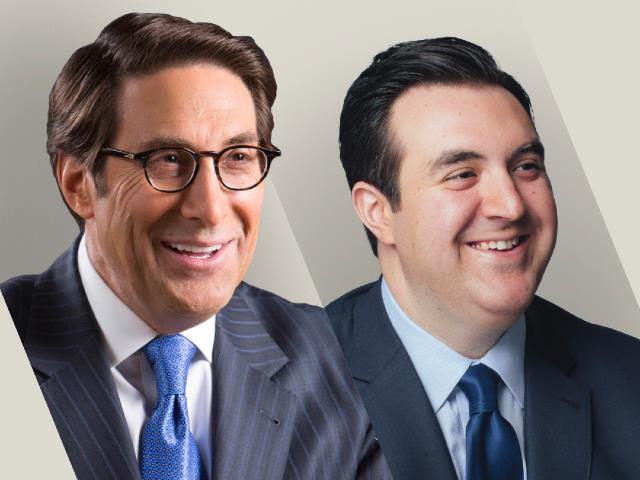
Logan Sekulow and Will Haynes break down the Trump administration's team meeting with Iran at the UN.
Logan Sekulow: Welcome to Sekulow. We got all the UN coverage for you. Will Haines is in studio with me. Jeff Ballabon, ACLJ Jerusalem joining us later talking about Norway throwing a ban on Jewish products. We're going to talk about that coming up. Rick Grenell is going to be joining us also, someone who is very familiar with the UN. Phone lines are open for you at 1-800-684-3110. But let's talk about this. President Trump addressed the elephant in the room which was a multiple-hour meeting between Steve Witkoff, Jared Kushner, and the foreign minister of Iran to start talking about, once again, this is live, this is not a repeat, but once again to discuss what it looks like to potentially bring an end to the conflict. Of course, President Trump later on said the two options. Either we're going to have a good deal or we're going to be annihilating them. Big words, we've heard it before, but we're back at it once again. He said he thinks that they should have a deal soon because why wouldn't we have a deal soon? And I think that again for people to look at this, it's sort of like the Greenland deal and you go, why wouldn't they have a deal? Well, Greenland and Denmark may be a little easier to deal with than the Islamic Republic of Iran.
Will Haines: That's right. And if you look at today, the president of Iran spoke at the UN. This is kind of what makes the UN so surreal at times when we host the UN, it's on US soil, and the country that we are in conflict with, their president comes to the UN and speaks and has protection that we protect.
Logan Sekulow: When you're within the UN, you're technically not under any sort of American jurisdiction legally. It becomes like a no-man's-land temporarily in the area. I know it's weird to think about, but in New York City, essentially it becomes an autonomous zone.
Will Haines: But at the same time, they still are staying in hotels. They still are bringing people. And then when you think about it also, the US guarantees protection on our soil. We don't want an international incident where a foreign diplomat or foreign leader is killed or attacked or assassinated on US soil, but at the same time, it's also the person we are in conflict with is here. That is the surreal nature of it. But the president of Iran, after we find out President Trump was very direct in his speech, we can play some of that that happened yesterday and contrast it with what the president of Iran said today in his speech before the UN. At the same time, we're finding out that this meeting happened that was three hours and it was what are called shuttle talks where they weren't necessarily sitting in the same room. They use an intermediary that comes in and talks to one side, gets all the information. It's like a live game of high-stakes telephone and then run back to the other side, tell them that, get more information and go. And it took three hours, which goes also to show you what we talked about yesterday to some degree where the president does utilize the UN in ways that are actual work, not just show. Both are happening, there are the posturing statements of the president's speech and other things that happen, but real work is also going on at the exact same time.
Logan Sekulow: That being said, when he was having this discussion in his speech, he said, "I have a big decision to make." And again, that was to make a deal with Iran or annihilating the Islamic Republic. Later on, he said it doesn't make sense for Iran not to essentially make a deal. They are waiting to see how I do in the midterm elections. What they don't realize, and this is what I want you to call in, how do you feel about this in terms of how the election may change your point of view? What they don't realize is that I'm not running. I'll be here for two and a half years. I give no credence and will not give credence to the election when it comes to Iran. It doesn't even enter my mind. The only thing that does is that Iran will never have a nuclear weapon. When you hear that from President Trump, does it make you feel like there will be any swaying him in terms of, let's say, you lose control of one part of the government? Or will this keep going? What do you think? 1-800-684-3110. Does it deter? Welcome back to Sekulow. I do want to hear from you. A lot of you are watching online and I appreciate that, but I want to hear your voice today. 1-800-684-3110. Again, we're talking about President Trump. Of course, he had his meetings throughout the UN and we know that the Trump administration had some very direct meetings, multiple-hour meetings with the Iranian delegation that again was in New York City was at the UN and they were discussing what the future could hold. President Trump had a lot to say about this, including planning out what a future could look like with a beautiful Iran, an Iran that is thriving, or an annihilated Iran. And he is putting it back on them to do this. At the same time, talking about he thinks Iran is waiting until after the midterms to make any kind of decision. Of course, we are only about a month away from the midterm elections at this point, six weeks from the midterm elections. And he's personally saying, it means nothing to me, so they can wait it out. That's fine, six more weeks, but it's not going to change my mind on the way Iran is going to be handled.
Will Haines: Well, and I think what's also interesting is you had the president of Iran today speaking and how did the president of Iran open it up? And once again, this is in the entire context of the US being in conflict with Iran with giant pictures of the Ayatollah, the dead Ayatollah, by the way, Ayatollah Ali Khamenei that was killed in this conflict. As well as bringing up the strike that hit the school that was on a military base that killed young children, young girls. That is how the president of Iran started this, going after the United States. And obviously, the president didn't hold back yesterday in saying I will annihilate them. So you're seeing these dueling speeches on the world stage, a back and forth almost as if the shuttle diplomacy that was happening was happening also on the stage of the General Assembly between the two presidents trading these rhetorical strikes against each other. But then you also see that the US performative yesterday, you saw the Cuban delegation walk out of the president's speech. Today, the US delegation got up and walked out when the Iranian president started speaking. So there is that theater that goes along with the UN. It may seem silly to many because you watch these acts that are completely compiled the day before or months in advance of, okay, we're going to send these low-level staffers in so that they can get out because we actually do need Secretary Rubio to be close by watching and things of that nature. So they decide we're going to send people in to walk out specifically to be on film showing the protest of the United States, but we're still allowing the president of Iran to come to the United Nations and speak. This all I think is interesting because the president of Iran is also trying to turn the rhetorical tide about who they are and showcase that we are just a peaceful people and let's listen. This is the president of Iran just earlier today talking about terrorism and let's hear from him.
President of Iran: We live in a world in which the powerful, instead of thinking about humanity, justice, fairness, and democracy, they seem to be the protectors and creators of instability and destruction. Whomever they wish to discredit, they label them as terrorists. 200 years for the past two centuries, Iran has not attacked any country or any territory, but we've always defended ourselves steadfastly. But now we're being accused of being a source of instability in the region, we're labeled terrorists.
Logan Sekulow: How dare they be labeled terrorists? They only slaughtered 50,000 of their own people in the streets. But don't worry, they didn't attack any other country or territory directly.
Will Haines: They just funded it.
Logan Sekulow: My goodness. The very first day of the conflict, they started hitting their Gulf neighbors that had done nothing in this conflict. Now let's remember also, I think we have to clarify this because it gets very confusing. This is the president of Iran. This is not the head of the IRGC which again, it operates in kind of two fronts while still kind of together.
Will Haines: That's right. Well, it also is what has made it so complex in the aftermath of not having the supreme leader being supreme over Iran anymore. Now that there is a new Ayatollah, a new supreme leader that no one's heard from, that people question whether or not he's even alive or if he's just a puppet of the IRGC. If he is alive, there is that friction internally now between the president of the country, the legislature of the country, and the IRGC which is extremely strong, and the cleric class as well. There are many different angles to this, but the president of Iran is who goes and speaks at the UN, not the Ayatollah, not other members, not military leaders. It is the president of the country. But does he have the authority to make statements on behalf of the country? All of these things are being showcased at the same time in real time on TV. But I also think it's interesting the way that he's talking about this, they just label us as terrorists, but then inferring that they are victims of terrorism later in that speech.
Logan Sekulow: And President Trump had a lot to say too. I think this is a fairly long bite and some of the stuff I've said already. But I think we should play it. I think you should hear from President Trump from his own mouth again. You can always read a little bit when you hear the words of President Trump on paper, it always reads a little different than when you actually hear him. Then sometimes you're like, oh, well, that was clearly a joke or clearly that was something a little more serious or bloviating or whatever it may be. So let's hear from President Trump again. This is his UN speech from just yesterday.
Donald Trump: But I have a big decision to make. Will a deal be made with Iran that lets them rebuild and create a far greater country than it ever was before? Maybe one of the greatest in the Middle East or even the world? Or do I annihilate the Islamic Republic and do it quickly, never giving them a chance to kill and destroy people and countries again? Do I drive them into hell with no chance of survival and no hope of future greatness or generations? But I believe we'll make a deal right after the election because it doesn't make sense for them not to.
Logan Sekulow: That is pretty hardcore language and you could see the responses. "Do I drive them into hell with no chance of survival and no hope of future greatness?" "But I believe we'll make a deal." I mean, if there isn't a more direct President Trump kind of quote, I can't imagine one. Let's go to Bill who is calling in from Wyoming online. Bill, you're on the air.
Bill: Alright, thanks for taking my call. I got a two-fold question here. I'm presuming that you guys have actually attended some of those assembly meetings and from what you're describing, it sounds kind of like a puppet show that's going on constantly with people getting up and going and coming and all this kind of deal in protest. And my second part is how did the other delegates respond to what President Trump said about what he's going to do with Iran?
Logan Sekulow: Let's start with the first one. Does this happen a lot? It does. It is very similar. If you watch other nations, if you watch the United Kingdom Parliament and all this stuff, there is a little bit more showmanship and honestly, sometimes disrespect for the office. That's why when people talk about President Trump doing this, yeah, I get in America we have sort of these buttoned-up standards that don't quite happen even in the Western world in other places. Certainly not in the Middle East, certainly not in the United Kingdom. They'll get up, they'll walk out, they'll protest, they'll yell, they'll scream. They're wearing wigs. It's getting wild in there. And then you come to America and we are so prudish that we get sort of clutching our pearls over this person didn't clap.
Will Haines: Yeah, but at the same time you see Congress most of the time is completely empty when people are giving their floor speeches to Congress, so not many people there anyway.
Logan Sekulow: But even talking about something like the State of the Union or something like that where we have our own theater, our theater is maybe just not as loud and obnoxious. And maybe that's changed now in the last few years. But yeah, it is a bit of a show. As Rick said yesterday, that part could be a show, but then there's real work happening off-screen. And that's when you see a three-hour meeting with the Iran delegation. They're not doing that just for fun. They're not doing that for show. There's no one to see it. They're doing that to hopefully get some work done. Sometimes that's not with the top-tier leaders. Sometimes that is with the team that is there of the top-tier leaders, but not the presidents. And that's where real work gets done. On the other hand, when we talk about how did other delegates respond to Trump's speech?
Will Haines: Well, when the president mentioned they'll never have a nuclear weapon, etc., you heard applause from the assembly from those in the hall at the UN General Assembly. So there was some support of that. On the other hand, you also have to think we focus a lot of times on the big names here. We watch President Trump. Obviously, the Iranian president is always an interesting one because of the history between the US and Iran, especially currently. Then you also think of when someone from Russia speaks or someone from China, those are ones that kind of make headlines. But you also think about every single UN country has the ability to speak at this. There's also moments where there's going to be shade thrown between countries about conflicts that we don't even know about and there are walkouts and things of that nature because it is the entire world on display there. There are still speeches going on right now as we speak. But that's not what's being broadcast every single moment on every single channel. It's just the big ones. So we'll break it down, we'll continue, and we've got a lot more ahead.
Logan Sekulow: Alright, as Will said, a lot more ahead. Phone lines are open. 1-800-684-3110. In the next segment, we're heading over to ACLJ Jerusalem with Jeff Ballabon. Interesting update in Europe about Israeli products and some consequences for owning them. We'll be right back. Welcome back to Sekulow. We have a pretty interesting update and I wanted you to call in about this as well because we'll be taking calls. This is the last segment for this first half-hour. In the second half-hour though, I'm going to be taking calls about this because this could spread, and we've seen it happen in other countries. This is coming out of Norway. Of course, this is not coming out of Iran. This is not coming out of the Middle East. This is coming out of what is a very Western European country. Something we don't even really think of as a country that would be any issue to the Jewish people or weigh in that heavily in the Middle East conflict. We're joined by Jeff Ballabon, by the way, from ACLJ Jerusalem. Now, we see a pretty big essentially proposal that would really punish their own citizens for engaging in any kind of commerce with who they feel are the occupying forces in the Palestinian territories. Jeff, why don't you kind of give us a little bit of backstory on this? We have seen companies back out of bringing their products into Israel. We've seen that kind of thing happen, but really not this. We've heard the calls for the BDS movement over the last decades. But when it comes to a country penalizing their own people, it does feel like that's something that would be coming out of a not-so-friendly neighbor to Israel.
Jeff Ballabon: Right. So what's happened now, and this is spreading. It's already officially as of yesterday illegal for citizens of Denmark, meaning it's a crime for them to purchase goods, let's say to buy a bottle of wine that was sold by or was made by Jews who live in Judea and Samaria, which the world likes to call the West Bank, but for thousands of years has always been known as Judea and Samaria. The irony is very deep. This is an extraordinary move, which is to say they're saying it's a crime for their citizens to buy not from the state of Israel, not from anything governmental, but from individual Jews. So the premise is that Jews should not be allowed to live in Judea. Jews should not be allowed to live in parts of Jerusalem. Now, this is again, not punishing Israel at all. It's not punishing the settlements, settlements just being a name for Jewish communities. But maybe some of them have incorporations under Israel's law. But if even a non-citizen, if a Jew happens to have shares in a business or start a business that's selling clothes in Efrat, which is a town right outside from Jerusalem, it's a crime and now in Norway they're proposing the same thing. Canada, Switzerland, a bunch of others, Sweden, other countries. I don't think Switzerland. Have said that they want to go along with this. The idea that you should punish Jews, this is about 850,000 Jews and they're saying that we will make it a crime in our countries to do business with them because of where they choose to live or do business. Why is that moral? Why is that not exactly what, in fact, it is exactly what the Nazis did when they created a boycott against Jews except the Nazis only did it within territory they controlled starting in Germany. These are countries who are chiming in, these are Western countries, saying that we are going to make it basically outlawed. We're going to boycott Jews for living where Jews want to live. There is not another race or nationality or ethnicity or religion or any group or identity that would be treated this way anywhere in the world and yet that's what they're proposing to do. And in fact, it became law now in the Netherlands and they're proposing it in Norway.
Logan Sekulow: With real consequences. I think this is the kind of wild part too, is that it's not just like, hey, a slap on the wrist if we catch you with a bottle of wine. Some of the proposed consequences are again, now not just for obviously the people selling, we're talking about for the people who just would, let's say, buy that bottle of wine from this area. We're talking about proposed jail time.
Will Haines: That's right. I mean, this is from the proposal in Norway. Norwegian citizens and companies would get prison up to three years for buying from, selling to, building for, or investing in businesses owned by Jews who live in Judea and Samaria, including in the most ancient revered Jewishly significant parts of Jerusalem. So once again, you also remember they don't consider all of Jerusalem Israel. They consider East Jerusalem a part of the West Bank as they want to call it, Judea and Samaria. But then you also see negligent violators, so you accidentally bought the bottle of wine? Six months. I mean, Jeff, it's in a part of the world that is notorious for going light on criminals. They are now saying if you make a purchase by accident, six months in jail.
Jeff Ballabon: You know, and this already now it's six years in jail under Dutch law starting yesterday, starting on September 22nd. It is six years in prison if you are traveling, let's say, through the United States and you stop at the duty-free shop or you're in America and you go to a wine store and you buy a bottle of wine and it happens to be made by a Jew and it happens to be made over the Green Line in territory that that country decides Jews should have no right to exist there. Their citizens can go to jail for that. So they're essentially not punishing Israel at all. What they're doing is they're turning this anti-Semitic, and it really is not about Israel, it's anti-Semitic. It's saying a Jew can't live somewhere. Why is that instead of talking about human rights and saying, "You know what? We believe that there should be a state of Palestine in addition to the state of Jordan and that state of Palestine should be in," well they don't call it Judea and Samaria, but it is Judea and Samaria, "that should be the West Bank." Instead of saying, "But you know what? In order to get there, the Palestinian authorities have to accept Jews living there the same way Israel has tons of Arabs and Muslims living in Israel as full citizens doing business there comfortably, being on the Supreme Court, being in its Knesset, being movie stars and TV stars," instead of saying, "We want you to until you normalize that, until you learn how to live with Jews, we're not interested in supporting your territory," they're saying the opposite. They're saying we have to already punish Jews just for living there.
Logan Sekulow: Jeff, there's a comment that just came in and said this isn't because again, we have people in our chat from all sides. They go, "Hey, this is not about banning Jews but banning settlers, the land occupiers." So how do you respond to that?
Jeff Ballabon: Well, okay, so first of all, settler's just another word for Jew in this case because it's saying that in other words, right now this is even according to them, this is disputed territory. That's all it is, and I believe that Israel legally has far more rights than anybody else to that territory. But let's say you don't believe that. Let's say you think Israel doesn't have the rights. That has nothing to do with Jews living there. Why can't a Jew live in a state of Palestine? Why is that normalized? Why is that accepted? Why are they criminalizing people for buying a product from a Jew? Now this again has nothing to do with the state of Israel and has nothing to do with settlements. It's saying that a Jew should not be allowed to live in certain areas of the world and oh by the way, those areas happen to be known as Judea and Samaria.
Will Haines: Yeah. If I went to the Midwest right now, I could go get a Danish in Wisconsin, a Denmark product from someone who has Danish heritage. I don't see another country saying six years in prison for buying that Danish. I mean, that is kind of the absurd analogy here is that people can live places. It isn't about the government. It isn't saying the government of Denmark should not exist or should not have a territory. It is saying the person who is Jewish cannot sell you a product and we're going to punish you with jail time. Not even a fine.
Logan Sekulow: And Jeff, I'll let you wrap up, only got about a minute, but you have an article right now on ACLJ.org where people can read this.
Jeff Ballabon: I mean look, the problem is that this is coming out of countries who within living memory, in memories of our grandparents, they banned Jews. They did this exact same thing. They boycotted Jews, they banned Jews. Now Norway is proposing it. Norway, in its constitution, which is held as this big liberal constitution in 1814, which modeled after America, it had a clause in it, Jews are still not allowed in the kingdom because there was already a ban on Jews in the kingdom. So this country understands that Israel came into being after the destruction of European Jewry by laws just like this and now they're proposing these same countries to move those laws to Israel and to the Jewish homeland itself.
Logan Sekulow: Thank you, Jeff, for joining us. I'm sure you'll be on later this week or next week, we appreciate it. Look, second half-hour's coming up. Don't go anywhere. Less than a minute break if you're watching online and you should be. That's on ACLJ.org, YouTube, Rumble, however you get your podcast live each and every day, 12:00 to 1:00 PM Eastern time. Phone lines are open for you at 1-800-684-3110. Again, don't go anywhere, this break is very short.
Related Episodes
About SEKULOW
The American Center for Law and Justice (ACLJ) focuses on constitutional law and is based in Washington, D.C. The ACLJ is specifically dedicated to the ideal that religious freedom and freedom of speech are inalienable, God-given rights. In addition to providing its legal services at no cost to our clients, the ACLJ focuses on the issues that matter most to you — national security, protecting America's families, and protecting human life.
About Jay Sekulow
Dr. Jay Alan Sekulow is Chief Counsel for the American Center for Law and Justice (ACLJ), a legal and educational not-for-profit organization that focuses on constitutional law, the defense of freedoms of speech and religion, and international human rights. He is also Chief Counsel of the European Center for Law and Justice (ECLJ) based in Strasbourg, France, and the Slavic Center for Law and Justice (SCLJ) in Moscow, Russia. The ACLJ also has an affiliate office in Jerusalem, Israel.An accomplished and respected judicial advocate, Sekulow has presented oral argument before the U.S. Supreme Court in twelve cases in defense of constitutional freedoms. Several landmark cases argued by Sekulow before the U.S. Supreme Court have become part of the legal landscape in the area of religious liberty litigation; these cases include Mergens, Lamb's Chapel, McConnell v. FEC, Operation Rescue v. National Organization for Women, and most recently Pleasant Grove City v. Summum.
In 2009, Townhall Magazine named Sekulow to its "Townhall of Fame" and recognized him as "one of the top lawyers for religious freedom in the United States." In 2007, the Chicago Tribune concluded that the ACLJ has "led the way" in Christian legal advocacy. In 2005, TIME Magazine named Sekulow as one of the "25 Most Influential Evangelicals" in America and called the ACLJ "a powerful counterweight" to the ACLU. Business Week said the ACLJ is "the leading advocacy group for religious freedom." Sekulow's work on the issue of judicial nominees, including possible vacancies at the Supreme Court, has received extensive news coverage, including a front-page story in The Wall Street Journal. In addition, The National Law Journal has twice named Sekulow one of the "100 Most Influential Lawyers" in the United States (1994, 1997). He is also among a distinguished group of attorneys known as "The Public Sector 45" named by The American Lawyer (January/February 1997). The magazine said the designation represents "45 young lawyers outside the private sector whose vision and commitment are changing lives."
Sekulow brings insight and education to listeners daily with his national call-in radio program, Jay Sekulow Live!, which is broadcast throughout the country on nearly 850 radio stations. Sekulow also hosts a weekly television program, ACLJ This Week, which tackles the tough issues of the day. He is also a popular guest on nationally televised news programs on ABC, CBS, NBC, CNN, FOX News, MSNBC, CNBC, and PBS.
Contact SEKULOW with Jay Sekulow
Mailing Address
American Center for Law and Justice
PO Box 90555
Washington, DC 20090-0555c
Legal Helpline
Phone: 757-226-2489
Fax: 757-226-2836
Member Services757-802-9160
Radio Call-in Number1-800-684-3110
(from 12-12:30 PM EST/EDT.)
Petition Call-in Number1-877-989-2255